Beyond the BOGO: Publix Charities delivers 2-for-1 surprise
Publix Super Markets is recognized as one of the nation’s premier supermarket chains, thanks to the famous BOGO offers, outstanding customer service and commitment to clean, inviting stores. The Lakeland-based grocer’s footprint continues to grow, now reaching 1,433 locations across the Southeast, including 72 stores serving customers in Charlotte, Collier, Glades, Hendry and Lee counties. To food banks and food pantries, though, Publix is more than just a great supermarket. It is a top-rated corporate sponsor that goes above and beyond to address food insecurity.
Over the years, Publix has been among the largest donors to Harry Chapin Food Bank. They provide truckload after truckload of donated food, including fresh fruits and vegetables that often are missing from the plates of economically disadvantaged families. Publix associates also volunteer their time packing produce bags and meal kits, and partake in mobile distribution events at community centers and churches across the region. Meanwhile, Publix Charities, a separate nonprofit entity, provides monumental grants that address food insecurity, homelessness, education and youth in the communities served by Publix Super Markets.
Publix Charities’ support of Harry Chapin Food Bank stretches back decades, but longevity is just one element demonstrating its commitment. They also provide meaningful contributions that make a difference in the community, which was one of Publix founder George Jenkins’ goals when establishing the charitable organization 60 years ago.
One recent day clearly illustrates that point.
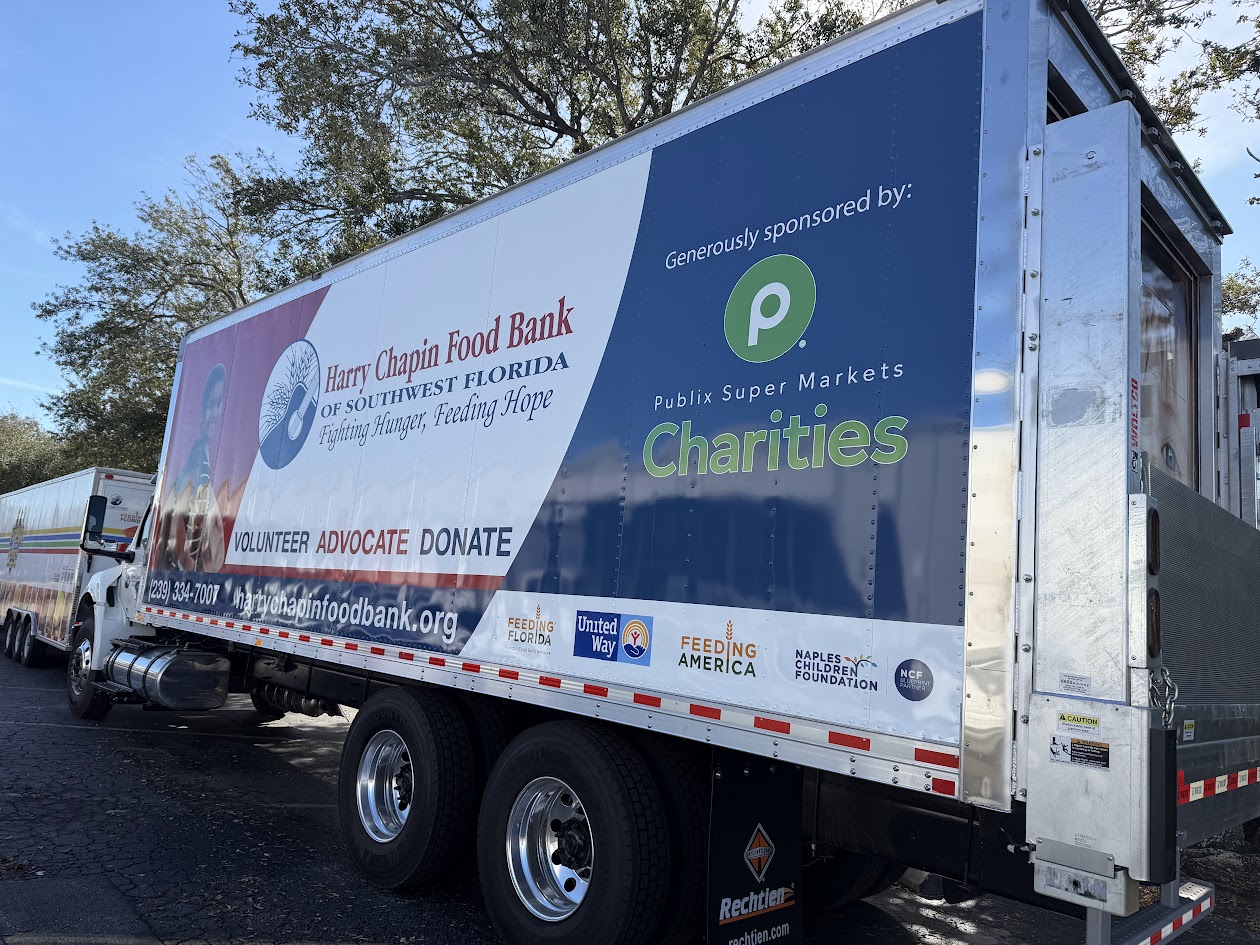
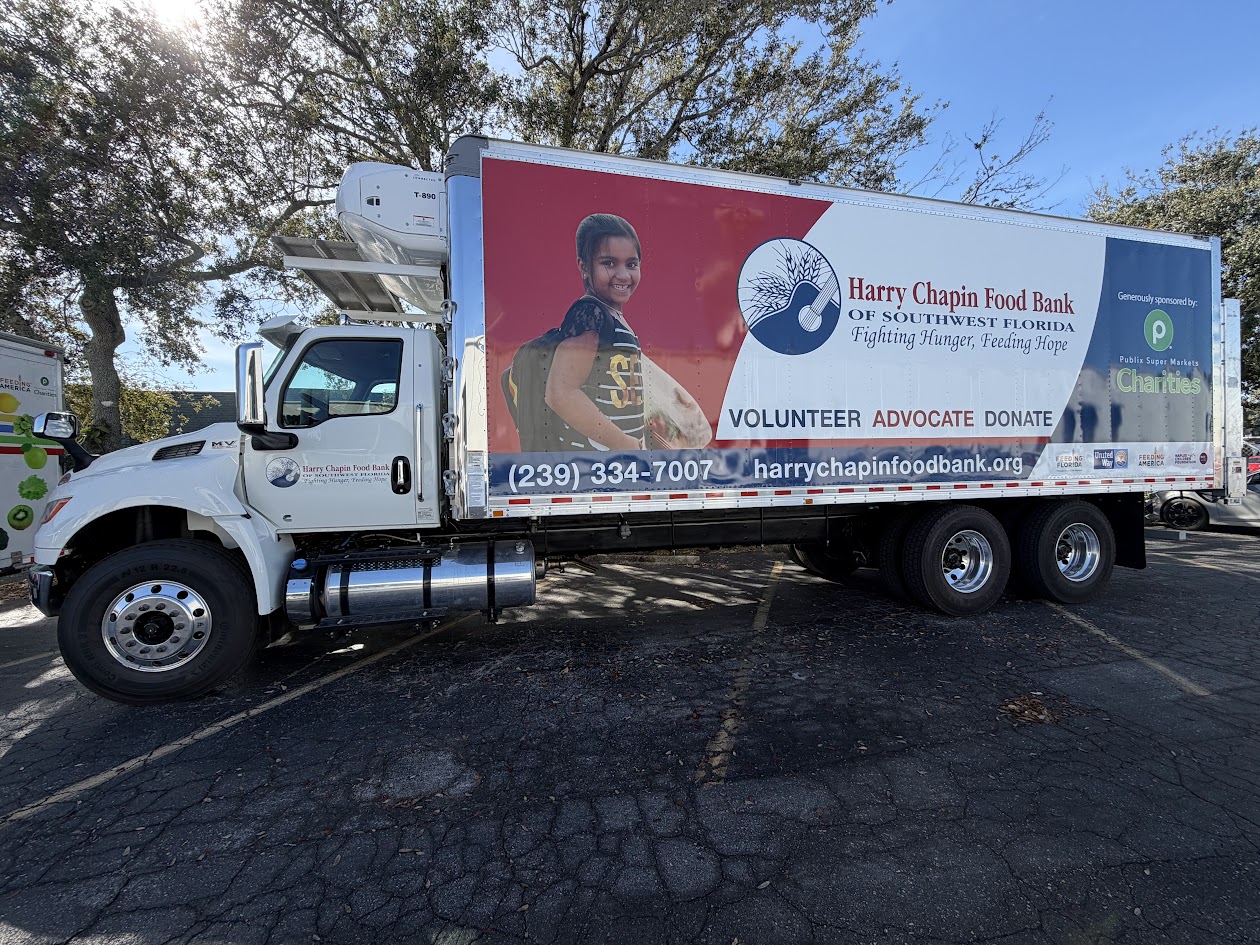
At 9:53 a.m. on Sept. 15, our grant manager received an email from John Doran, executive director of Publix Charities, informing her that Harry Chapin Food Bank was being awarded a $200,000 grant to purchase and wrap a 26-foot refrigerated delivery truck to transport food into communities across Southwest Florida. The Food Bank relies on a fleet of trucks to bring food to areas outside of Fort Myers and Naples, like Lehigh Acres, Immokalee, LaBelle and Golden Gate. A new truck is – literally – the vehicle that gets food into the hands of neighbors who need it.
That wasn’t the only message our team received that day from Publix Charities.
At 3:47 p.m., Doran followed with another email, this time noting that the Food Bank will also receive a donation of $100,000 to purchase food for neighbors in need. This funding allows Harry Chapin Food Bank to purchase food directly ensuring the organization can make an even greater impact in the community – from leveraging low‑cost options and sourcing items that meet the specific needs of the families we serve.
As 2026 begins, Harry Chapin Food Bank is facing unprecedented demand for food. Publix and Publix Charities, as they have for years, are among those leading our community’s fight to end hunger. You can join the movement by visiting HarryChapinFoodBank.org to make a secure online donation.
Partner logo

Photos
About
About the Author
Richard LeBer is president and CEO of Harry Chapin Food Bank, Southwest Florida’s largest hunger-relief nonprofit and the region’s only Feeding America partner food bank.