

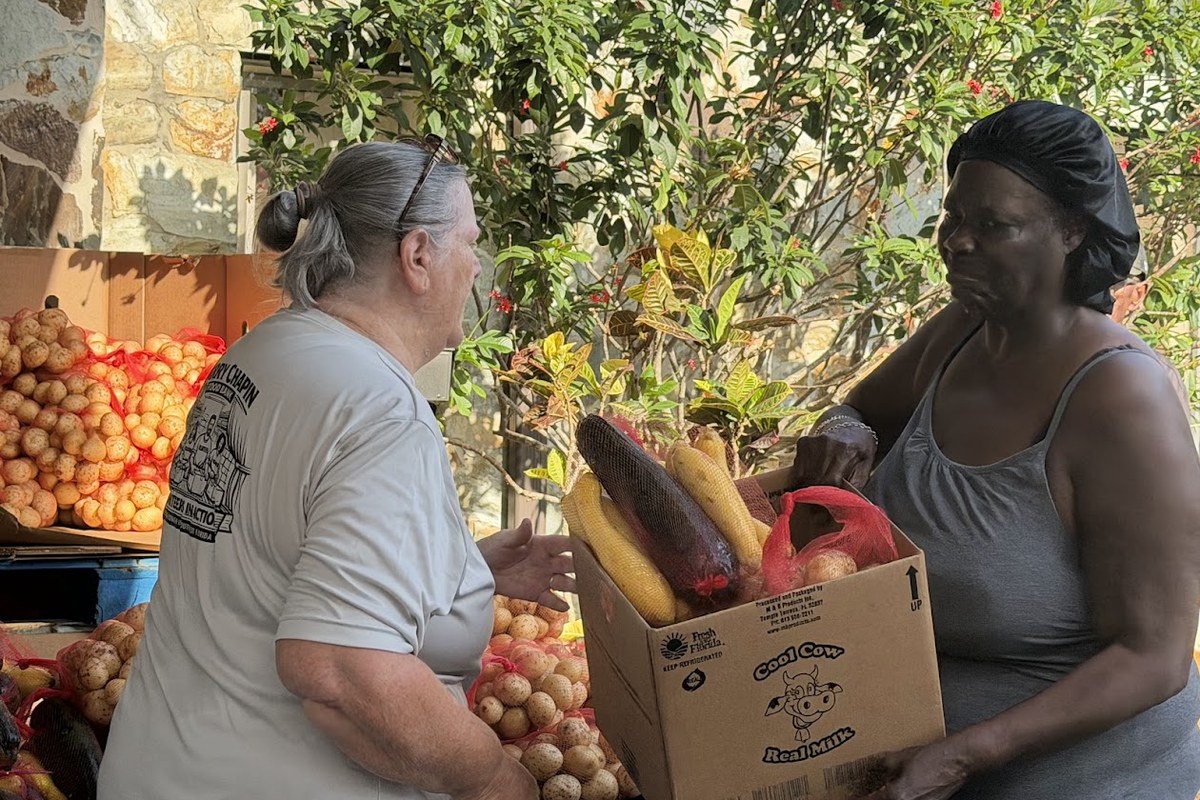
When Harry Chapin Food Bank holds a food distribution in Immokalee, Debra Milton is among the neighbors who come for fresh produce, protein products and other nutritious food to bring home to their families.
Debra has been coming to Harry Chapin Food Bank distributions in the community for years.
"I’ve been receiving help from Harry Chapin Food Bank ever since they started coming here," she said.
For Debra, the food helps fill a significant gap. She receives just $60 a month in SNAP benefits, commonly known as food stamps, and shares her home with four grandchildren.
"It’s not enough to feed me and my grandkids in the house," Debra said. "The food they give us, I can stretch it out with everybody in the house."
That ability to stretch her family’s food supply is especially important in Immokalee, an area of Collier County where many families face economic challenges and access to nutritious food can be difficult. Harry Chapin Food Bank currently holds approximately six food distributions in Immokalee each month and also supplies food through several partner agencies serving the community.
For Debra, making ends meet comes with other challenges as well. She undergoes dialysis, and her grandchildren help her around the house. With a limited household budget, even everyday staples can be difficult to afford.
"I wish I could get more food stamps so I could buy more food like eggs and cereal," she said. "But we have to do what we have to do."
Her experience reflects the difficult choices facing many Southwest Florida households as the cost of food and other necessities continues to strain family budgets. In communities with particularly high levels of need, having food available regularly and close to home can provide some relief.
For Debra, that support means being able to bring food home and make it last for the people who depend on her. And when asked what she would say to the people who make the distributions possible, her message was simple.
"I tell them thank you so much. Without them, I don’t know how I would make it," Debra said. "God bless you all, and thank you all very much."