About Harry Chapin Food Bank
Neighbors helping neighbors since 1983
Harry Chapin Food Bank works with agency partners, volunteers and donors to get nutritious food to neighbors in Southwest Florida.
Who We Are
A food bank built by and for our community
Harry Chapin Food Bank is a member of Feeding America, the nation’s network of food banks. We serve Charlotte, Collier, Glades, Hendry and Lee counties from distribution centers in Fort Myers and Naples.
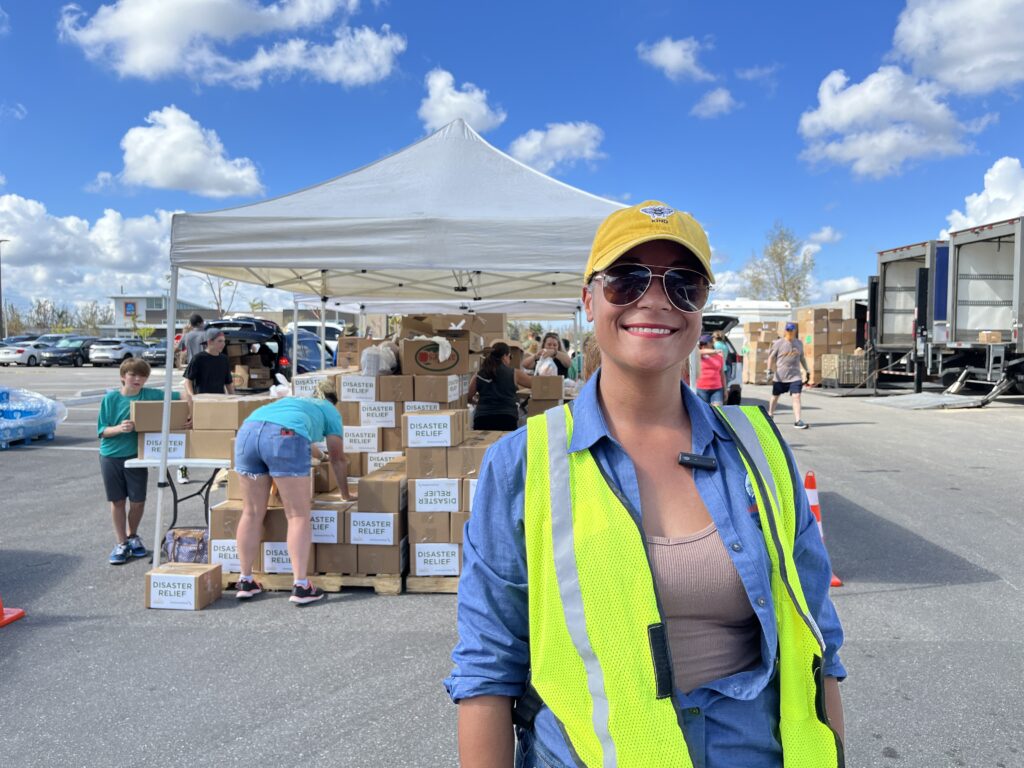
Most of the food we distribute reaches neighbors through our network of agency partners: food pantries, meal sites and community organizations close to where people live. We also bring food directly to neighbors through mobile distributions and programs for children, families and seniors.
We carry the name of Harry Chapin, the singer-songwriter who devoted much of his life to ending hunger.
Mission: To lead our community in the fight to end hunger.
Vision: That no one has to go hungry in our community.
Your support helps neighbors access food
In 2026, donors, volunteers and agency partners helped Harry Chapin Food Bank distribute food across our five-county footprint.
40 million
Pounds of food distributed
33.4 million
Equivalent meals
15.9 million
Pounds of fresh produce distributed
Reporting period: July 2025–June 2026.
Our Story
Harry Chapin Food Bank began in 1983 as a small cooperative at the Fort Myers State Farmers Market, handing out surplus government cheese. Here is how it grew.
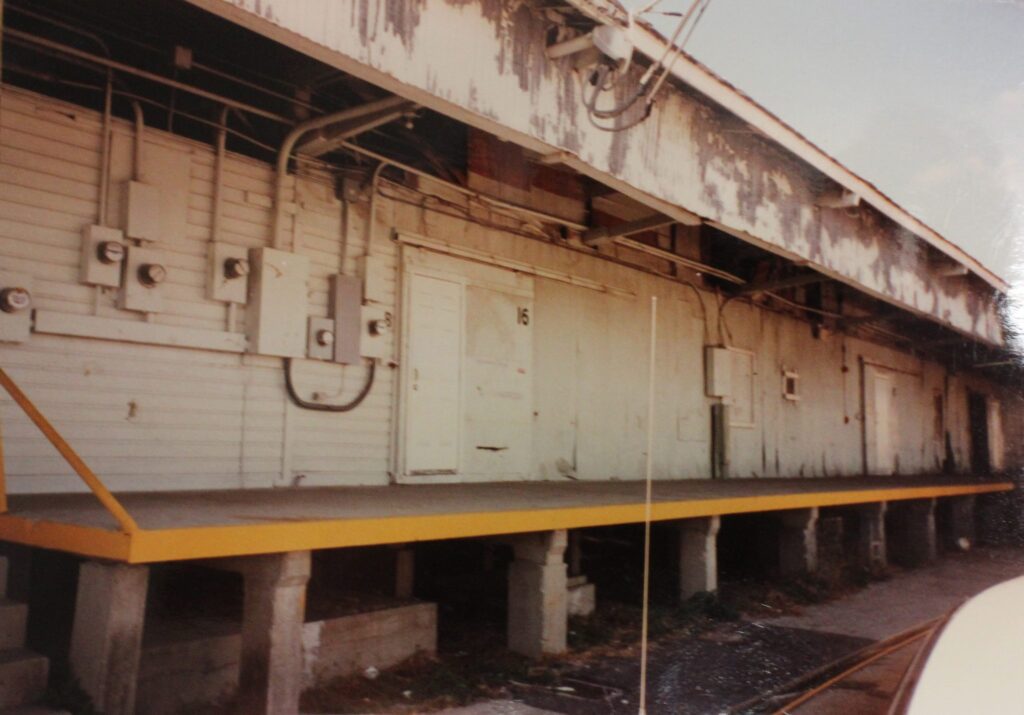
The cooperative’s first home, at the Fort Myers State Farmers Market. 1983
Lee County Food Cooperative opens
The Lee County Food Cooperative opens at the Fort Myers State Farmers Market, distributing surplus government food such as cheese and dairy products. It soon begins collecting donations from retailers and growers as well.
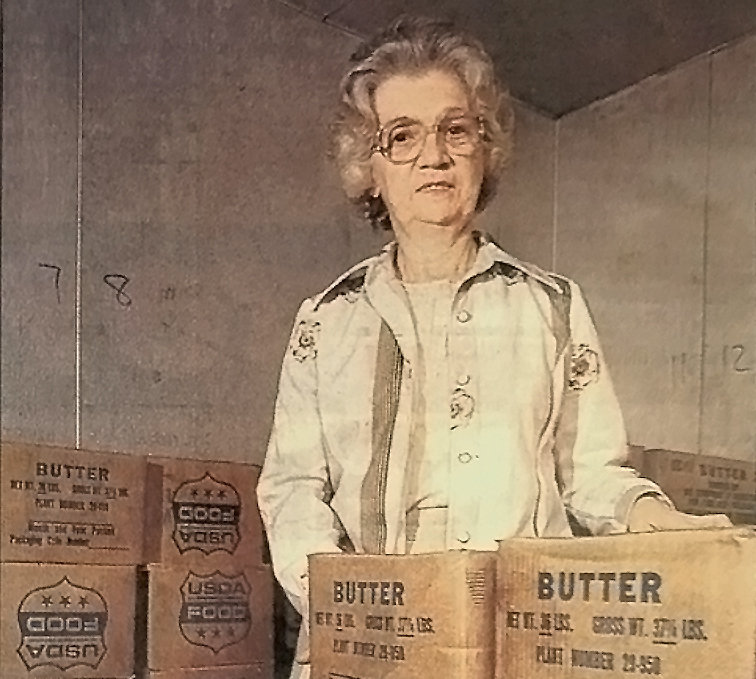
Dee Baker, the food bank’s first full-time director, with cases of USDA butter. — News-Press 1985
Renamed Southwest Florida Food Bank
The cooperative is renamed Southwest Florida Food Bank, reflecting its growing work beyond Lee County.
1990
Joins America’s Second Harvest
The food bank joins America’s Second Harvest, the national network of food banks now called Feeding America.
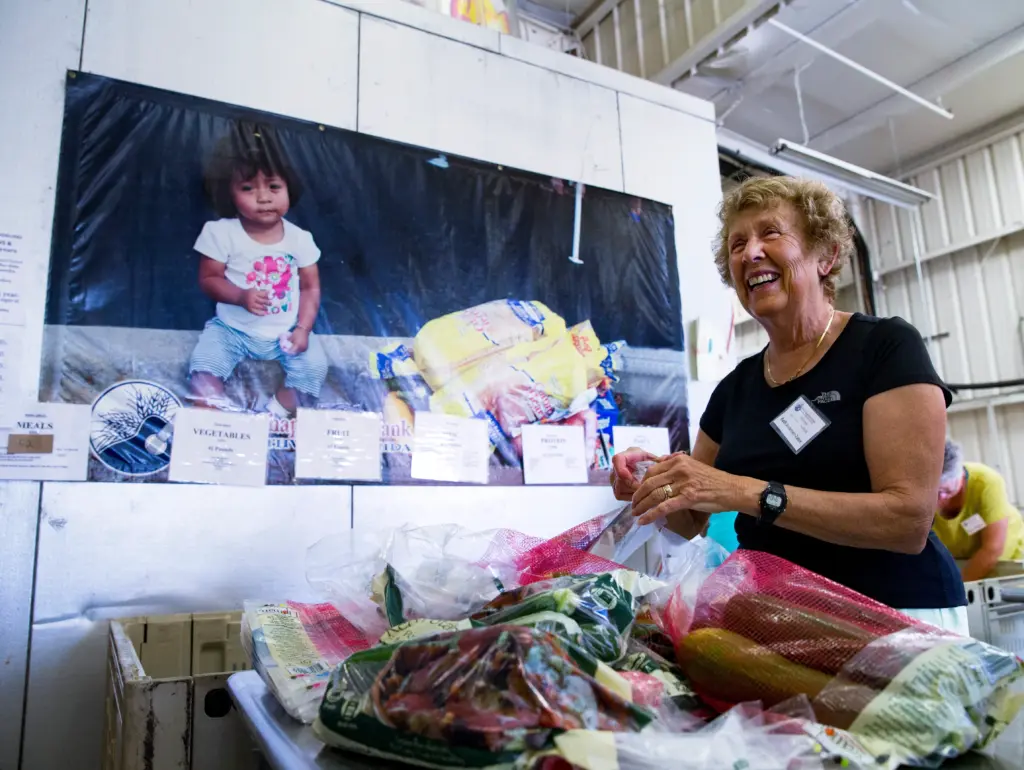
A volunteer sorts fresh produce. (Recent photo.) 1990s
Begins serving Collier County
Southwest Florida Food Bank extends its food distribution into Collier County.
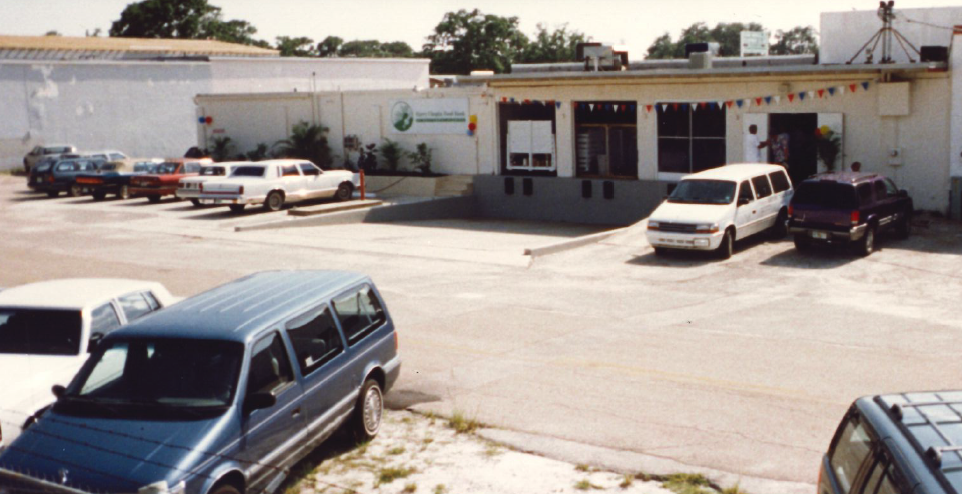
The former warehouse on Alicia Street in Fort Myers. Mid-1990s
Moves to Alicia Street
The food bank moves into a former meat-processing plant on Alicia Street in Fort Myers.
1994
Becomes Harry Chapin Food Bank
With the Chapin family’s permission, the food bank takes the name Harry Chapin Food Bank of Southwest Florida, honoring the singer-songwriter and anti-hunger advocate.
2009
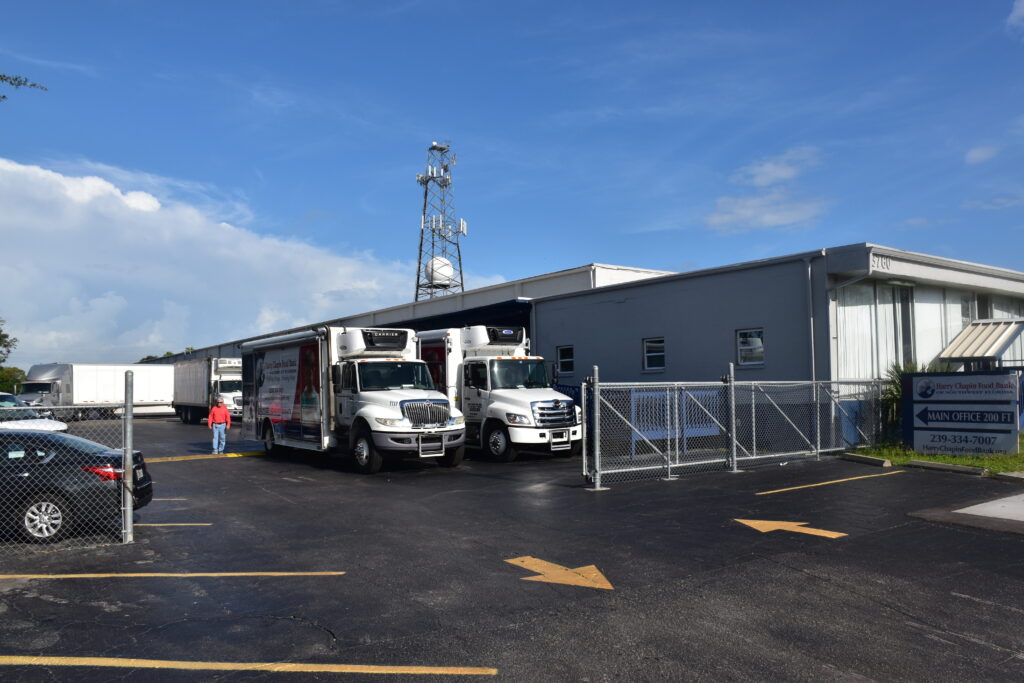
Moves to Fowler Street
The food bank moves to a larger warehouse at 3760 Fowler Street in Fort Myers, today its main distribution center.
2010
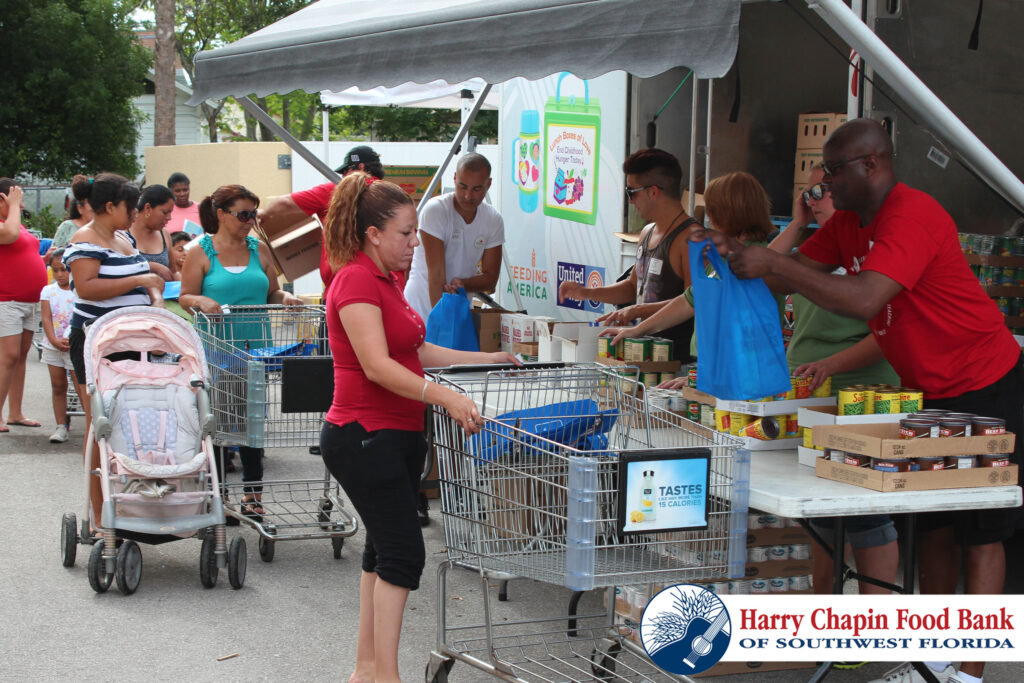
Launches mobile pantries
The food bank launches its mobile pantry program, bringing food directly to underserved communities.
What We Do Today
Every neighbor deserves dignified access to food. These are some of the ways Harry Chapin Food Bank gets nutritious food to people who need it.
Mobile Pantry Distribution
Bringing fresh food directly to neighborhoods across our five-county footprint.
Agency Partner Network
A vetted network of nonprofits, faith communities, and community organizations that distribute food close to where neighbors live.
Harry's Helpings
Family food kits distributed through childcare, early-education, and after-school sites where a traditional pantry isn't practical.
Where is the need greatest?
See where food insecurity and low food access are highest across our five-county footprint.
Be part of the story
Every gift and every volunteer hour helps Harry Chapin Food Bank reach more neighbors.